Why Buyers Skip Your Home Listing in the First 10 Seconds (and How to Fix It)

You’ve got about 10 seconds. Sometimes less. That’s how long a potential buyer spends on your listing before deciding to keep scrolling or click away. Recent industry data shows that 43% of buyers start their home search online as their very first step before contacting an agent. That means your listing’s first impression is more important than you might think.
When buyers are browsing homes late at night on their phone, they’re flipping through dozens of listings and deciding in seconds based on what they see and what they don’t.
So yes, your home might check all the boxes: an updated kitchen, a great location, and a fair price. But if that doesn’t come across instantly, many potential buyers will never even notice it. That’s why understanding why buyers skip listings and how to stop that from happening is so valuable in today’s market.
It all starts well before the open house. The market moves fast, sometimes week by week. Working with an agent who uses accurate, up-to-date data means you’re not guessing the price or timing, you’re making informed moves.
The New Front Door: Online Listings Have Replaced the Drive-By
Not long ago, “curb appeal” meant what you saw from the street: landscaping, paint, the mailbox, the overall first impression in person. Today, that first impression is a thumbnail in a search feed.
According to the National Association of Realtors (NAR), almost all home buyers now search online, and most spend weeks scrolling through listings before they ever set foot inside a home. In fact, buyers usually visit only a small number of properties in person, which means most homes are ruled out online long before a showing ever happens.
That changes everything. Today, a listing is about what decides what gets skipped while the first impression is made on a screen.
So what makes someone skip a listing in the first ten seconds? Let’s go through the biggest reasons. vary widely, with some areas still competitive while others are clearly shifting toward buyer leverage
Reason #1: The Photos Are Failing You
The biggest deal-breaker in any listing? Photos. According to research cited by PhotoUp, buyers spend about 60% of their time on a listing looking at images, while only around 20% goes to reading the description. And roughly 85% of buyers say listing photos are critical to their home search.
Think about that for a second. Before they read about the features, before they check the school district, before they even notice that beautifully renovated bathroom, they’re already reacting to the photos.
And those reactions happen fast. Research from imgix shows that buyers form an initial opinion about a property in just 20 seconds of viewing a listing. A strong photo can hold attention for that long. A bad one? You’ve lost them in about two seconds.
The impact of getting photography right is not subtle:
- Listings with professional photos sell 32% faster than those without.
- High-quality images result in 118% more online views.
- Homes with pro photography have an 84% higher chance of selling within the listing period.
Listings with professional photos can close between $934 and $116,000 more than comparable listings with low-quality images.
What Bad Photos Look Like (And Why They Hurt)
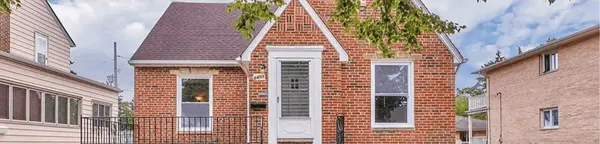
Bad real estate photos don’t even have to be “bad” to hurt a listing. They just need to be forgettable. Dim lighting, cluttered kitchen counters, an exterior shot taken from an awkward angle on a gray day…none of it screams disaster, but buyers do notice.
Eye-tracking research shows people spend about a minute looking through listing photos, with roughly 20 seconds focused on the first image (usually the exterior). That first photo carries the most weight in whether they keep scrolling or move on.
Luckily, this is one of the easiest things to fix. Professional photography makes a measurable difference, and 72.2% of Realtors say high-quality photos help them win more listings, because they know it leads to better results.
Reason #2: The Price is Invisible Or Immediately Off-Putting
Here’s something you need to remember. Your price communicates value, but it also controls visibility.
When people search on platforms like Zillow, Redfin, or Realtor.com, they almost always use a price filter. They’re not browsing everything. They’re narrowing it down to what fits their budget, usually in tight brackets of about $25,000 to $50,000.
According to Redfin’s breakdown of pricing psychology, pricing just below a round number is a strategic move that can meaningfully expand your buyer audience. A home listed at $499,900 appears in searches for homes under $500,000 and potentially in searches for homes under $450,000, depending on how the buyer has set their range. List at $505,000, and you’ve potentially vanished from a large pool of qualified buyers.
This is called price bracketing, and it’s one of those details that sounds minor until you realize how much traffic it affects.
The Danger of Overpricing
Overpricing is the most common and most costly listing mistake. A 2025 report by Realtor.com found that nearly 1 in 5 U.S. sellers had to reduce their list price just to get their home sold.
What makes overpricing particularly damaging is the cascade effect:
- Week 1: A few curious clicks, but serious buyers keep scrolling because they can spot market value.
- Week 3: Showings dry up. Your agent recommends a price drop.
- Week 5: You reduce the price. But now you’re no longer a “new listing.” You’re a “price reduced” listing and that label is a yellow flag for buyers who assume something must be wrong.
- Week 8: Another reduction. At this point, buyers start to assume there’s a reason it hasn’t sold.
In 2026, with mortgage rates still elevated and buyers carrying more caution into their searches, accurate pricing from day one is a survival strategy.
Reason #3: Too Few Photos Or the Wrong Ones
The number of photos in a listing matters, not just their quality.
Research cited by mlsimport.com, based on Zillow data, found that listings with fewer than nine photos are 20% less likely to sell within 60 days compared to homes with 22–27 images. On the flip side, listings with 20+ high-quality photos tend to spend about 32 fewer days on the market than those with limited visuals.
So yes, quantity matters, but structure matters just as much. If your second photo is a bathroom closet and your third is the side of the garage, you’ve disrupted the visual story a buyer wants to experience. Good listings take buyers on a logical tour: exterior, entryway, main living areas, kitchen, bedrooms, bathrooms, outdoor spaces, neighborhood. When that flow is broken, buyers lose the thread and click away.
A few specific additions that buyers respond to:
Video walkthroughs: Listings that include videos receive 403% more inquiries than those without.
Drone/aerial photography: Homes with drone photography sell 68% faster according to industry data.
Twilight photos: These generate about 50% more views than standard daytime shots.
Reason #4: The Description Misses the Point
By the time a buyer reads your listing description, they’ve already decided they’re interested. If the photos brought them in, the description either confirms that interest or extinguishes it.
Common description mistakes that cause buyers to bail:
- Restating the obvious: Saying “3 bedrooms, 2 bathrooms, attached garage” when that’s already visible in the listing data wastes the reader’s time. Use the description to highlight what isn’t obvious from the photos.
- Overusing adjectives without substance: Don’t use words like “Stunning, Buyers glaze over them. Virtuance’s analysis of listing descriptions notes that the best descriptions are grammatically clean, tell a story, and focus on the property’s actual best features without exaggerating.
- Missing key details buyers are looking for: Omitting information like HOA fees, property tax estimates, or a roof’s age frustrates buyers and it signals a lack of transparency, which erodes trust.
- Grammar and spelling errors: This one sounds small, but it isn’t. A description riddled with errors signals carelessness and buyers wonder what else about the property has been treated carelessly.
The description is not the place to oversell. It’s the place to tell the truth in an appealing way. Help the buyer imagine themselves in the space. What does the morning look like in that kitchen? What does it feel like to come home to that backyard?
Reason #5: Incomplete or Inaccurate Listing DataThis is where working with an agent who uses reliable, current market data becomes genuinely important. Accurate comps, up-to-date MLS information, and verified property details are the foundation of a listing that performs. Agents equipped with platforms like Agentmark have access to the kind of real-time data that helps ensure listings are positioned correctly from day one, not corrected after the damage is done.
Reason #6: No Sense of the Neighborhood or Lifestyle
Research from AOR Marketing notes that in 2025 and into 2026, buyer search behavior has become increasingly lifestyle-driven. While people are filtering by price and square footage, they’re also thinking about walkability, school quality, proximity to work and parks, and the feel of a neighborhood.A listing that treats location as an afterthought, or worse, doesn’t mention it at all, leaves buyers to fill in the blanks with assumptions. Good listings give buyers a sense of place. What’s within walking distance? Is there a farmers’ market on weekends? Is the neighborhood nice? These details require attention and can make a real difference in whether a buyer feels pulled toward a property or indifferent to it.Reason #7: The Listing Feels Stale
Days on market (DOM) is a number that buyers pay close attention to, and so do the algorithms behind listing platforms. A home that has been sitting on the market for weeks or months carries an invisible stigma. Buyers assume there’s something wrong with it, even if the real reason it hasn’t sold is poor photography or an overpriced start.
According to Redfin data, homes with price reductions spend an average of 20 to 30 extra days on the market compared to those that are priced correctly from the beginning.
The longer a home sits, the more leverage buyers feel they have to negotiate and the more likely they are to skip it entirely in favor of something freshly listed. Getting the listing right the first time isn’t just about ego. It’s about economics.
What This Means for Sellers: A Practical Checklist
Here’s what a strong listing looks like in 2026:
- Hire a professional photographer. This is non-negotiable. Budget for it. The return on investment is documented and substantial.
- Lead with your best exterior shot. Buyers spend more time on the first exterior photo than any other image. Make it count.
- Include 20+ high-quality images. Cover every meaningful space, in logical order. Include drone shots if possible.
- Price strategically and accurately. Use a Comparative Market Analysis (CMA) built on current, verified data. Understand the search filter brackets and where your home sits.
- Write a description that adds value. Don’t repeat what the data fields already show. Tell the story of living in the home.
- Verify all listing data before it goes live. Square footage, bedroom count, lot size, HOA info, check everything. Errors cost you buyers.
- Include neighborhood context. Help buyers understand the lifestyle your home offers, not just the specifications.
What This Means for Buyers: How to Look Past Listing Flaws
Not every great home shows up looking like one online.
A listing with average photos might still be a really solid property. A price that feels a little high at first glance might still have room to negotiate. The risk for buyers is that moving too fast can mean missing homes that are actually worth a closer look.
Instead of instantly skipping, the most effective buyers ask: Why does this look like this, and what am I not seeing yet? Sometimes poor photos or weak presentations aren’t a reflection of the home, but of how it was listed. And that can create opportunity.
At the same time, it’s important to ground that curiosity in real data. Is the price aligned with recent comparable sales? How long has the home been on the market, and what does that usually signal? What are similar homes actually selling for right now?
Final Thoughts
A buyer’s attention is not something you’re entitled to. It’s something you earn with great photography, honest and strategic pricing, a compelling narrative, and accurate data.
The homes that capture attention in the first ten seconds aren’t necessarily the most beautiful or the most expensive. They’re the ones where someone took the time to think about how a buyer experiences a listing and made every element work together to create a first impression worth lingering on.
In 2026, that kind of intentionality is the difference between a sale and a scroll-past. And the good news is, it’s entirely within your control.
Categories
- All Blogs (170)
- Brunswick Local Restaurants (1)
- Brunswick Parks (4)
- Discover Brunswick (6)
- Discover Cleveland (2)
- Discover Medina County (11)
- Discover Strongsville (12)
- Discover Wadsworth (5)
- EVENTS (1)
- Explore Local Restaurants (1)
- Frequently Asked Questions (5)
- Listings (6)
- Medina Local Events (12)
- Medina Parks (4)
- Moving to Medina County (1)
- Schools in Brunswick (1)
- Schools in Wadsworth (1)
- SOLD Properties (8)
- Strongsville_Parks (9)
- Strongsville_Restaurant (1)
- Strongsville_Schools (1)
- testimonial (2)
- Things to do (2)
- Valley City_FAQ (1)
- Valley City_Parks (3)
- Valley City_Restaurants (7)
- Valley City_School (1)
- Valley City_Things to Do (1)
- Wadsworth parks (1)
- Wadsworth Restaurants (1)
- Wadsworth_things to do (1)
Recent Posts








"My job guide my clients to their happy place. I am here to get my sellers top dollar and my buyers the best deal.'